
Would you know exactly what to do if a colleague collapsed in front of you today, or would you find yourself frozen by the fear of doing it wrong? With 146,700 serious workers’ compensation claims recorded across Australia in the 2023-24 period, the need for genuine, life-saving competency has never been higher. If you’re searching for HLTAID011 Provide First Aid training, you probably already know that workplace safety isn’t just about ticking a box; it’s about having the confidence to act when every second counts.
We understand that the path to certification often feels daunting. You might be worried about the physical demands of the practical CPR assessment or simply confused about how to choose between an RTO and a third-party provider. This guide simplifies the process by breaking down the 2026 requirements for the HLTAID011 Provide First Aid unit. We’ll show you how to master the curriculum and meet national assessment standards without letting training disrupt your entire work week. You’ll learn about the latest ARC guidelines, USI requirements, and how to maintain your workplace compliance through 2026 and beyond.
Key Takeaways
- Understand why HLTAID011 Gold Coast training is the current national benchmark for workplace safety, officially replacing the superseded HLTAID003 unit.
- Master the essential DRSABCD emergency action plan and life-saving CPR techniques for adults, children, and infants.
- Compare blended learning and traditional face-to-face formats to find the training schedule that best fits your professional commitments.
- Prepare for the mandatory assessment requirements, including the physical demonstration of CPR on a manikin to secure your nationally recognised certificate.
- Ensure your workplace remains compliant in 2026 by training with a family-run business delivering units on behalf of Registered Training Organisation 3399.
The Importance of HLTAID011 Provide First Aid in Australian Workplaces
HLTAID011 Provide First Aid represents the benchmark for emergency response training across Australia. This unit officially superseded HLTAID003, reflecting updated clinical guidelines and more rigorous assessment standards. Because it’s issued under the Vocational Education and Training (VET) framework, your qualification carries weight in every state and territory. Whether you’re looking for HLTAID011 Gold Coast training or a course elsewhere, you’re gaining a portable skill set that remains valid for three years. The principles of first aid focus on preserving life, preventing further injury, and promoting recovery, which are the core pillars of this national curriculum.
Who Needs This Certification?
Safe Work Australia’s codes of practice mandate that businesses provide adequate first aid facilities and personnel. For many, this means appointing specific First Aid Officers who must hold a current HLTAID011 certificate. This isn’t just a recommendation; it’s a compliance necessity for high-risk environments like construction sites and manufacturing hubs.
Educators and childcare workers also find this unit essential, though they often pair it with specific asthma and anaphylaxis units to meet departmental requirements. For childcare professionals specifically, completing a childcare first aid refresher Gold Coast course under the HLTAID012 framework ensures they meet the additional specialised requirements of the National Quality Framework. Electricians and tradespeople frequently bundle this training with UETDRMP018 (Low Voltage Rescue) to meet specific industry safety regulations. If your role involves a duty of care toward others, this certification is likely your baseline requirement for employment.
National Portability and Compliance
One of the biggest advantages of the HLTAID011 unit is its national recognition. Because the training is regulated by the Australian Skills Quality Authority (ASQA), a certificate earned in Queensland is legally recognised in New South Wales, Victoria, or any other state. This portability is vital for contractors and professionals who move between regions for work. It ensures that safety standards remain consistent regardless of where the job takes you. Professionals working across the border region, for example, can explore first aid training in Tweed Heads South as a convenient option that meets the same national certification standards.
To maintain this national record, every student must provide a Unique Student Identifier (USI). This number links your training results to your official Australian transcript, ensuring you never lose proof of your qualifications. When you enrol in HLTAID011 Gold Coast courses, your provider will verify this USI to ensure your completion is recorded accurately on the national database. This system provides transparency and allows employers to easily verify that your skills meet current Australian standards without needing to track down physical paperwork from years ago.
Inside the Curriculum: What You Will Learn in HLTAID011
The HLTAID011 curriculum is designed to transform a bystander into a confident first responder. It’s much more than just learning to apply a bandage. When you undertake HLTAID011 Gold Coast training, you’re engaging with the official HLTAID011 unit of competency, which sets a high standard for clinical knowledge and practical skill. The course is structured to ensure you can respond to various medical emergencies, from minor injuries to life-threatening cardiac arrests.
Mastering Life-Saving Techniques
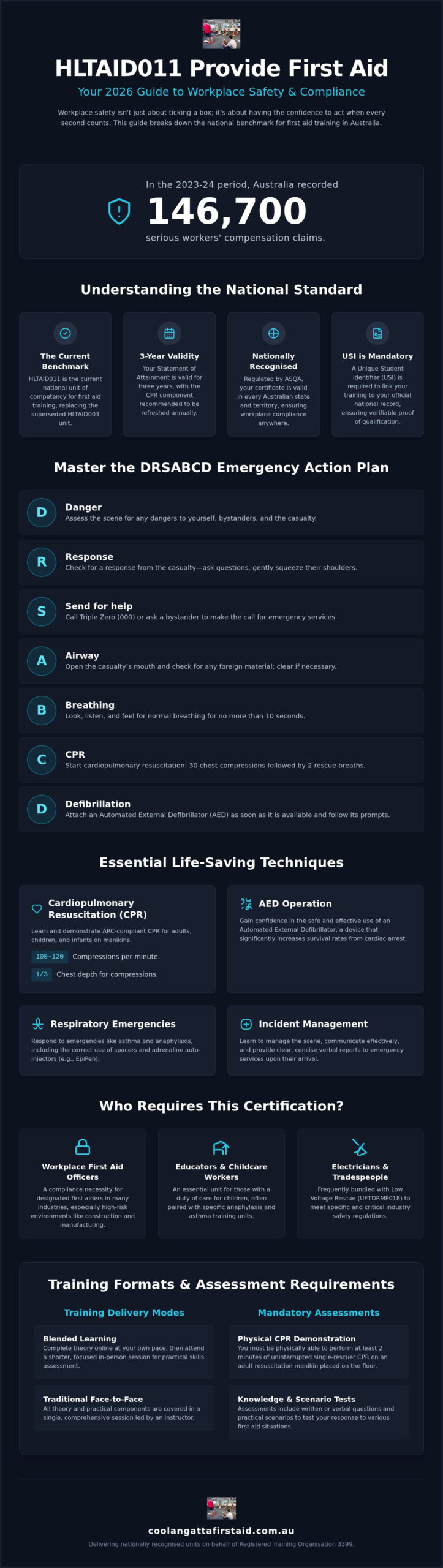
The curriculum’s backbone is the DRSABCD emergency action plan. This mnemonic guides you through Danger, Response, Send for help, Airway, Breathing, CPR, and Defibrillation. Mastering this sequence is critical because it provides a structured mental checklist during high-pressure situations. It allows you to assess a scene quickly and prioritise actions that save lives.
You’ll practice cardiopulmonary resuscitation (CPR) on adult, child, and infant manikins. This training follows the latest Australian Resuscitation Council (ARC) guidelines, which in 2026 continue to emphasise a compression depth of approximately one-third of the chest and a rate of 100 to 120 compressions per minute. You’ll also learn the safe operation of an Automated External Defibrillator (AED), a device that significantly increases the chances of survival during a sudden cardiac arrest. Beyond cardiac care, the unit covers respiratory emergencies like asthma and anaphylaxis, ensuring you can use spacers and adrenaline autoinjectors correctly.
Communication and Incident Management
Effective first aid involves more than physical intervention. You must also manage the scene and the people involved. This unit teaches you how to provide clear, concise verbal reports to emergency services, ensuring paramedics have the vital information they need upon arrival. Clear communication can drastically improve casualty outcomes by streamlining the handover process.
Privacy is another key focus. You’ll learn the importance of maintaining casualty confidentiality and protecting their dignity during an intervention. Finally, the course addresses the psychological impact of providing first aid. It covers post-incident stress management and the importance of debriefing, helping you process the event and maintain your own mental well-being. If you’re ready to build these essential skills, you can book your first aid training with a team that prioritises practical confidence.
Comprehensive Injury Management
The syllabus also dives into a wide range of common Australian injuries. You will learn to manage:
- Severe bleeding: Using direct pressure and clinical dressings to control haemorrhage.
- Fractures and dislocations: Applying appropriate immobilisation and support techniques.
- Burns: Assessing the severity of the burn and applying correct cooling methods.
- Bites and stings: Responding to venomous snakes, spiders, and marine life using the Pressure Immobilisation Technique (PIT) where applicable.
Training Delivery Modes: Choosing the Right Format for You
Selecting the right training format is essential for balancing your professional obligations with the need for high-quality safety education. Everyone has different learning preferences and schedule constraints, so modern providers offer several ways to complete your certification. Whether you are a first-time student or looking for HLTAID011 Gold Coast training to renew your skills, understanding these delivery modes helps you choose the most efficient path to compliance. Those in the northern New South Wales region seeking nearby options may also find our guide to nationally recognised first aid training in Tweed Heads South a useful resource for comparing course formats and schedules.
The Benefits of Blended Learning
In 2026, blended learning has become the preferred choice for most Australian professionals. This mode uses a sophisticated online learning management system (LMS) to handle the theoretical side of the unit. You can access the modules on any modern device with a stable internet connection, allowing you to work through the material at your own pace. By completing the multiple-choice quizzes and reading materials before you arrive, you significantly reduce your required classroom time.
This technical approach is particularly beneficial for tradespeople and busy office managers who can’t afford a full day away from their responsibilities. Instead of sitting through hours of theory in a classroom, you spend your face-to-face session focusing almost entirely on hands-on skills like CPR and wound management. This ensures that when you do attend the practical assessment, you’re already grounded in the necessary knowledge, making the session more productive and less time-consuming.
Group and Workplace Training Solutions
For businesses looking to train multiple staff members at once, corporate group training is an excellent solution. Trainers can come directly to your facility, which eliminates travel time for your employees and allows for a more customised experience. When training happens on-site, the instructor can tailor the scenarios to the specific risks found in your industry, such as managing falls in a warehouse or treating burns in a commercial kitchen.
Organising a group session ensures that your entire team maintains a consistent standard of safety. It also allows you to schedule the training during a time that causes the least disruption to your operations. This collaborative environment often leads to better team communication during actual emergencies, as colleagues learn how to support one another through the DRSABCD protocol in their own familiar workspace.
Traditional Face-to-Face and Refresher Options
Some learners still prefer the traditional face-to-face model, which involves a full day of immersive classroom instruction. This format is ideal if you enjoy direct interaction with a trainer and want the opportunity to ask questions as you go. For those who already hold a current certificate, refresher courses are also available. While your HLTAID011 certificate is valid for three years, don’t forget that the CPR component (HLTAID009) must be updated every 12 months to meet Australian workplace standards. Keeping these dates in mind ensures your compliance never lapses. To understand exactly how long does first aid certificate last under current WHS regulations and when you need to renew, it’s worth reviewing the specific timelines that apply to both your first aid and CPR qualifications.
Assessment Requirements: How to Earn Your First Aid Certificate
To receive your nationally recognised certificate, you must demonstrate competency in both theoretical knowledge and practical skill. Assessment for HLTAID011 Gold Coast training is designed to be rigorous yet supportive, ensuring every graduate leaves with the capability to manage a real emergency. It’s not enough to simply understand the concepts; you must prove you can apply them under pressure to meet Australian national standards.
The Practical Assessment Process
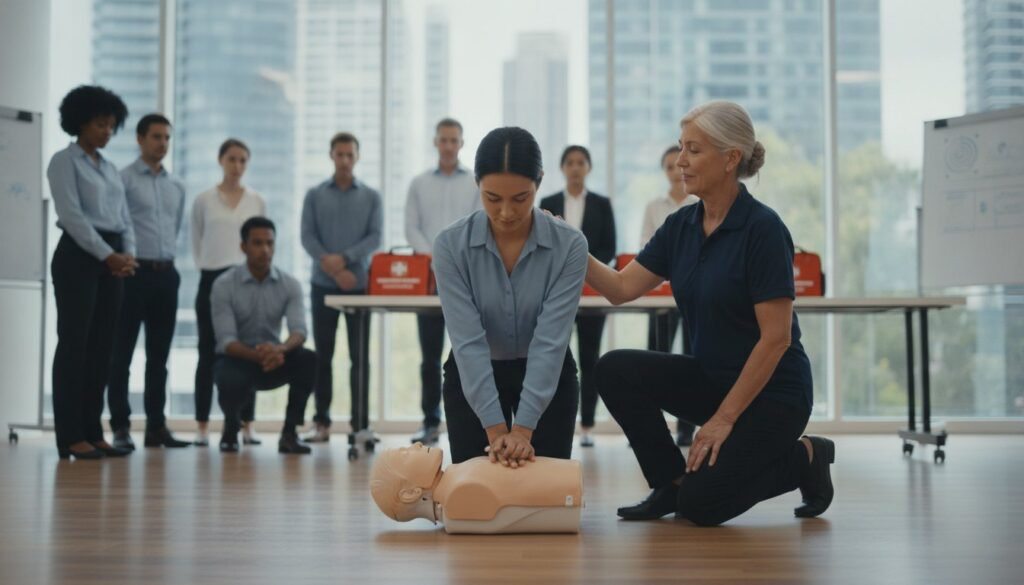
The most critical part of the assessment is the practical demonstration of CPR. National standards require you to perform at least two minutes of continuous CPR on an adult manikin placed on the floor. This is a non-negotiable physical requirement. While it can be physically demanding, it replicates the reality of most emergency scenes where a casualty is rarely found on a table or bench. If you have any physical limitations, it’s a good idea to discuss these with your trainer before the session begins.
In addition to CPR, you will be assessed on your ability to use an Automated External Defibrillator (AED) correctly. You must demonstrate that you can follow the device’s voice prompts without hesitation while maintaining the safety of those around you. Your assessor will also look for correct management of an unconscious but breathing casualty, including the proper use of the recovery position to ensure a clear airway. These hands-on tasks are the final hurdle in proving you are ready to act as a first responder.
Theory Assessment and USI
Before your practical skills are finalised, you must complete a theory assessment. This usually involves multiple-choice questions that cover the legal aspects of first aid, such as the duty of care and the importance of casualty consent. You’ll also be tested on your understanding of various medical conditions, from cardiac events to allergic reactions. If you don’t pass a specific component on your first attempt, most providers offer the opportunity to re-sit the assessment after further practice or clarification of the material.
To finalise your result and receive your credentials, you must provide a valid Unique Student Identifier (USI). This government-issued number allows your provider to link the unit to your national training transcript. Once you’ve successfully completed both the theory and practical components, certificates are usually issued on the same day. This quick turnaround allows you to present your credentials to your employer immediately. If you’re ready to take the next step, you can enrol in your first aid course and begin your journey toward certification today.
Booking Your Accredited Course with Coolangatta First Aid
Coolangatta First Aid & CPR Training provides expert delivery of the HLTAID011 Provide First Aid unit. As a family-run business, we understand that learning life-saving skills is a serious commitment, but it shouldn’t be an intimidating one. We’ve built our reputation on providing a supportive and professional environment where students feel comfortable asking questions and practising their skills. When you choose us for your HLTAID011 Gold Coast training, you aren’t just another number in a large lecture theatre. You’re learning from dedicated professionals who care about your success and your ability to respond in a crisis.
To ensure the highest standards of compliance and quality, our training is conducted as a third-party for Registered Training Organisation ABC LicenceTraining (RTO 3399). This partnership means your certification is nationally recognised and meets all the rigorous requirements set by Australian regulators. It bridges the gap between the personalised service of a small business and the formal accreditation of a large RTO. This structure ensures that your certificate is valid for workplace compliance across all industries, including high-risk sectors.
Why Choose Coolangatta First Aid & CPR Training?
Our trainers bring real-world experience in emergency response to every session. This background allows them to move beyond the textbook and provide practical insights that make the DRSABCD protocol easier to remember. We are committed to making first aid training engaging and stress-free, focusing on building your confidence rather than just your knowledge. We also offer the flexibility to bundle your training with other essential units. For example, many of our students combine their first aid with HLTAID009 Provide cardiopulmonary resuscitation or UETDRMP018 training Gold Coast for a more comprehensive safety profile that meets the specific compliance requirements of the electrical and construction industries.
Easy Enrolment and Next Steps
Starting your journey toward certification is a straightforward process. Our online booking system is designed for both individuals and corporate groups, allowing you to secure your spot in minutes. Once you’ve enrolled, you’ll receive immediate access to all necessary pre-course study materials. This early access allows you to complete the theoretical component of your HLTAID011 Gold Coast course at your own pace, ensuring you arrive at the practical session fully prepared. For businesses requiring a more tailored approach, our team provides customised corporate training quotes. We can organise sessions that fit your specific operational hours and industry risks, ensuring your team stays compliant with minimal disruption.
Secure Your Workplace Safety Standards
Mastering the HLTAID011 Provide First Aid unit is about more than just obtaining a piece of paper; it’s about gaining the readiness to protect your colleagues and community. By understanding the DRSABCD protocol and keeping your skills current through flexible training modes, you ensure your workplace remains compliant and safe. A nationally recognised certification provides the portability you need for a career that spans across Australia, backed by the rigorous standards of the VET framework.
As a family-run business, we pride ourselves on delivering high-quality, engaging training as a third-party for RTO 3399. Whether you’re a first-time learner or a professional seeking HLTAID011 Gold Coast certification, our supportive approach ensures you leave with genuine confidence. Don’t wait for an emergency to realise you need these skills. Enrol in your HLTAID011 Provide First Aid course today and take the first step toward becoming a capable first responder. Your ability to act decisively could one day save a life.
Frequently Asked Questions
Is HLTAID011 Provide First Aid valid for three years?
Yes, the HLTAID011 certificate is valid for three years from the date of issue. While the overall unit remains current for this period, Safe Work Australia and the Australian Resuscitation Council (ARC) recommend that the CPR component is updated every 12 months. This annual refresher ensures that your life-saving skills remain sharp and that you stay informed about any updates to resuscitation protocols or clinical guidelines. For a detailed breakdown of these renewal timelines and what "currency" means under Australian WHS law, see our complete guide on how long a first aid certificate lasts under 2026 Australian standards.
Can I complete the Provide First Aid course entirely online?
No, you cannot complete this course entirely online because the national assessment standards require a face-to-face practical demonstration. While you can complete the theoretical modules and quizzes through a blended learning platform at your own pace, you must attend a physical session to prove your competency. This involves hands-on tasks like performing CPR on a manikin and using an AED, which cannot be accurately assessed through a screen.
How much does the HLTAID011 course cost in 2026?
The cost of the HLTAID011 unit varies across different training providers and delivery formats. Factors such as whether you choose a traditional full-day classroom session or a blended learning model can influence the total fee. When looking for HLTAID011 Gold Coast training, it’s best to check current enrolment details directly on the provider’s website. Most reputable organisations include all training materials and the issuance of your nationally recognised certificate within their standard course fee.
What is the difference between HLTAID011 and HLTAID012?
HLTAID011 is the standard first aid unit for most Australian workplaces, covering a broad range of emergencies. In contrast, HLTAID012 Provide First Aid in an Education and Care Setting is specifically designed for educators, childcare workers, and school staff. While both cover CPR and basic first aid, HLTAID012 includes additional specialised training for managing emergencies involving infants and children, such as specific asthma and anaphylaxis protocols required by national childcare regulations. Educators looking to keep their credentials current can find everything they need in our dedicated guide to the childcare first aid refresher Gold Coast certification process.
Do I need to perform CPR on the floor to pass the assessment?
Yes, performing CPR on an adult manikin placed on the floor is a mandatory requirement for the HLTAID011 unit. You must demonstrate at least two minutes of uninterrupted compressions. This physical requirement ensures you can effectively respond in a real-life situation where casualties are typically found on the ground. If you have a physical condition that might prevent this, notify your trainer before the course begins.
What happens if my first aid certificate has already expired?
If your certificate has expired, you are no longer considered a qualified first aider under workplace compliance standards. There is no grace period for these qualifications, so you will need to enrol in a full HLTAID011 course to regain your certification. Many students find that an expired certificate is a good opportunity to undertake a blended learning course, which allows them to refresh their knowledge online before completing the mandatory practical assessment.
Is the HLTAID011 certificate recognised in all Australian states?
Yes, the HLTAID011 unit is part of the national Vocational Education and Training (VET) framework and is regulated by the Australian Skills Quality Authority (ASQA). This means your certificate is nationally recognised and portable across every state and territory in Australia. Whether you move for work or are a contractor frequently crossing borders, your qualification remains valid and accepted by employers as meeting the standard for workplace first aid training nationwide.
Can I bundle my First Aid course with CPR or LVR training?
Yes, bundling is a highly efficient way to meet multiple safety requirements at once. Many professionals, especially those in the electrical or construction industries, choose to combine their HLTAID011 Gold Coast training with units like UETDRMP018 training Gold Coast to stay on top of the strict 12-month renewal cycle and ensure full compliance with live low voltage panel rescue requirements. Bundling these courses often reduces the total time spent in the classroom and ensures that all your essential safety certifications are current and aligned with your specific industry risks.
